
EON Universal turns a facility’s engineering drawing and a handful of ordinary photos into a labelled, connected, correctly-scaled 3D twin in minutes, not days.
Take a few pictures, drop them into an image to 3D generator, get a model. It was insufficient and primitive for concrete reasons:
No single input carries all three. So we take each from the source that actually holds it.
Which parts exist and what each one is from the drawing’s symbols and tags.
Which parts connect the pipes read from the drawing’s lines. A photo can’t see hidden runs.
Real position, size and depth from the photographs. A flat drawing has no coordinates.
Detect every component and tag, and trace the lines into a connectivity graph identity and topology.
Not a few all of them, from any angle. A vision system locates each tagged part and returns a labelled 3D box.
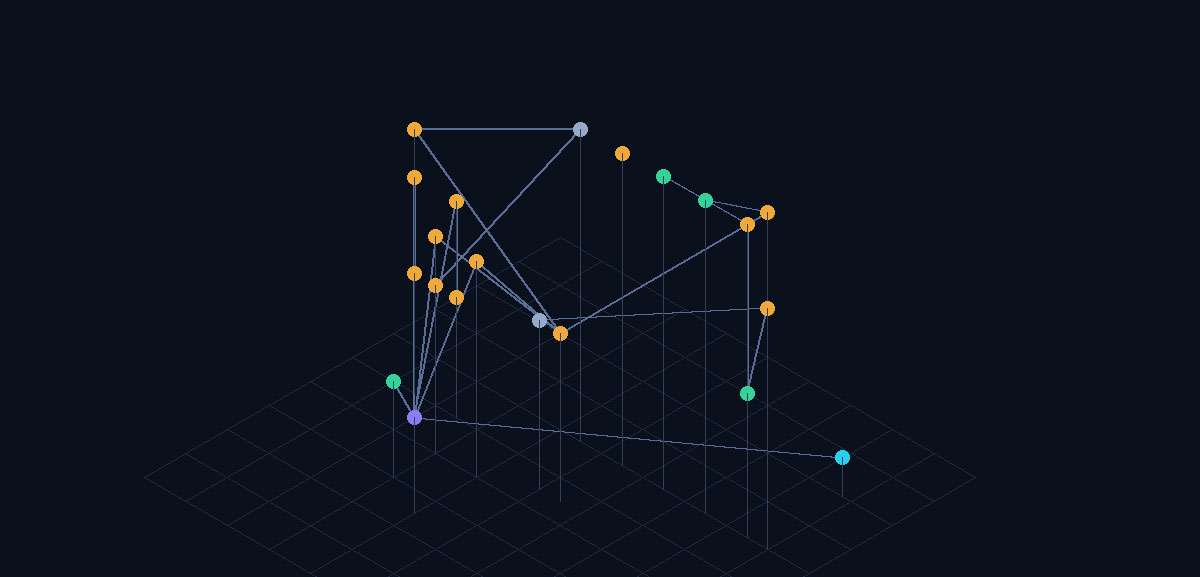
The photos are registered into one common 3D frame a coherent skeleton with real front-to-back depth.
The EON Universal library snaps the correct, recognized 3D models onto the skeleton scaled to true, ground-truth dimensions.
The Configurator lays engineering-correct piping between the parts, along the drawing’s connectivity no crossings.
Every value carries a confidence, and the finished twin is checked back against the original photographs.
Seen from below, the reconstructed rig reads as a rectangle a real footprint not a flat line. That is recovered depth.
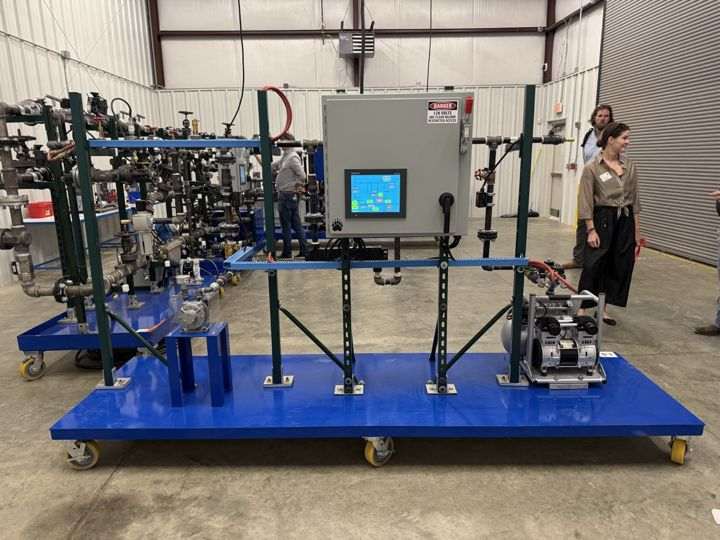
Parts Read
Parts Read
Pipes Traced
Pipes Traced
Placed in 3D
Placed in 3-D
Depth Levels
Depth Levels
Building your own 3D environment is the hardest part of adopting Genesis. EON Universal removes it converting the drawings and photos you already have into a ready-to-use, operable twin.
Validation is graded cheap checks first, deep checks only when warranted.
Parts found, pipes connected, anything unwired, confidence on each.
Your photo next to the model from the same angle.
The twin projected back onto your photo, scored per part.
A deep audit against a scan, when the stakes call for it.
A unique value-add on top of EON Genesis fast, accurate, and built to be trusted.